
Kenya’s Schools Under Siege: The Fires, The Fear, and a Nation Searching for Answers
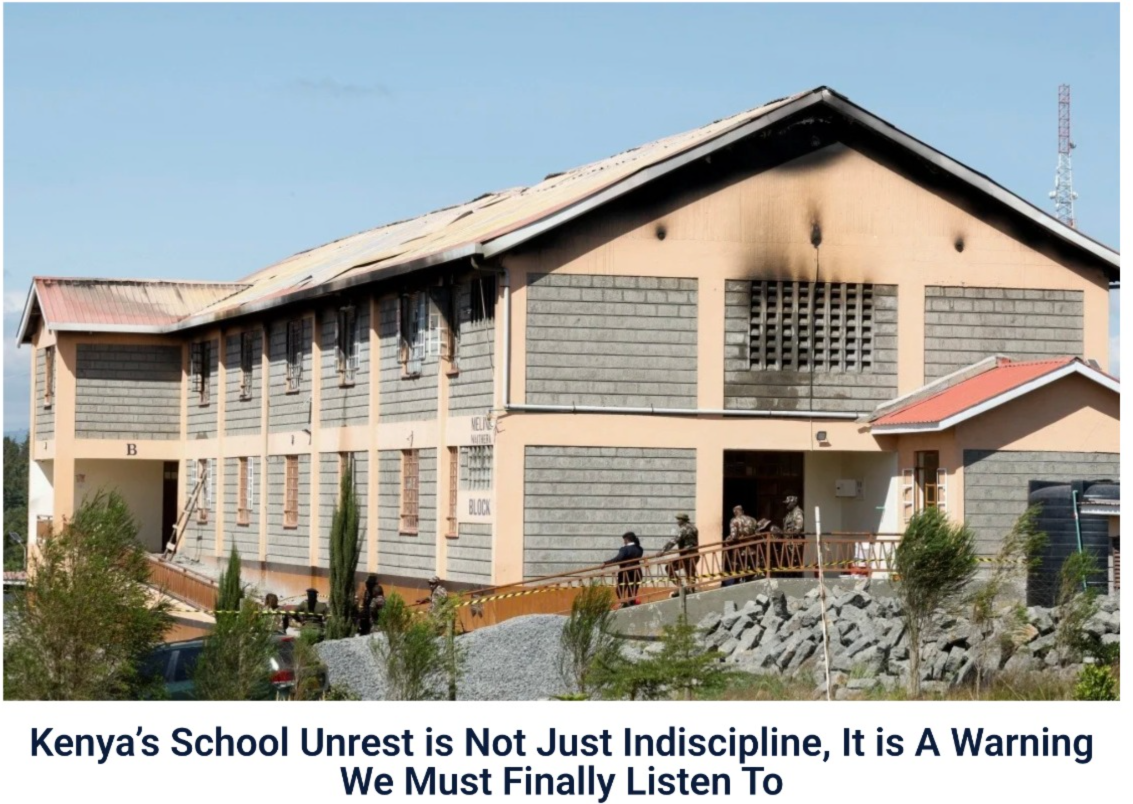
For generations, Kenyan schools have been viewed as places of hope a path toward a brighter future for millions of young people. But in recent months, that hope has been overshadowed by fear, grief, and uncertainty as a wave of student unrest, school fires, and tragic deaths has swept across the country. What began as isolated incidents has grown into a national crisis, forcing school closures and raising urgent questions about the state of education, student welfare, and safety in Kenyan institutions.
The turning point came in late May 2026 when a devastating fire broke out at Utumishi Girls Academy in Gilgil, Nakuru County. In the early hours of the morning, flames engulfed a dormitory housing hundreds of students. By the time firefighters and rescue teams brought the blaze under control, at least 16 students had lost their lives and dozens more had been injured. Survivors recounted scenes of panic as girls struggled to escape the burning building, with some reportedly forced to jump from windows to save themselves.
The tragedy shocked the nation. As parents gathered outside the school desperately seeking information about their children, investigators began piecing together what had happened. Preliminary findings pointed to suspected arson, and authorities later arrested several students in connection with the fire. Investigations also revealed concerns about safety measures, including overcrowded dormitories and emergency exits that were reportedly inaccessible during the disaster.
Yet the Utumishi Girls fire was not an isolated event.
Across Kenya, reports of student unrest have surged. Dormitories, administration blocks, and other school facilities have been set ablaze in incidents linked to strikes and student protests. Education authorities and civil society organizations have reported dozens of cases of unrest and arson in schools within a short period, disrupting learning and causing millions of shillings in property damage.
As tensions escalated, schools in several counties were forced to close their doors. In Trans Nzoia, Nakuru, Bomet, Kericho, Narok, Kisii, Nyamira, and other regions, learning was interrupted as administrators struggled to contain unrest and ensure student safety. Some schools sent learners home indefinitely, while others increased security measures and tightened supervision.
The closures have left parents worried and students uncertain about their academic future. For candidates preparing for national examinations, the disruptions come at a critical time. Many fear that prolonged closures and instability could affect academic performance and deepen existing challenges within the education system.
While the immediate focus remains on restoring order, experts argue that the deeper causes of student unrest cannot be ignored. Historically, school strikes in Kenya have often been linked to concerns over discipline, living conditions, academic pressure, student representation, and communication breakdowns between learners and school administrations. In several past cases, frustrations have escalated into acts of destruction with devastating consequences.
Sadly, Kenya is no stranger to school fire tragedies. In 2024, a dormitory fire at Hillside Endarasha Academy in Nyeri County claimed the lives of 21 students. Before that, the 2001 Kyanguli Secondary School fire remains one of the darkest chapters in the country's educational history, killing 67 students after a dormitory was deliberately set ablaze. More than two decades later, the nation continues to grapple with similar incidents despite repeated promises of reform and improved safety standards.
The recurring pattern has prompted renewed calls for action. Education officials have announced stricter measures, investigations, and reviews of safety protocols in boarding schools. Parents, teachers, and education stakeholders are demanding better fire preparedness, improved counseling services, stronger student engagement mechanisms, and enhanced monitoring of boarding facilities.
Beyond the statistics and headlines lies a painful human story. Families are mourning children who left home in pursuit of education but never returned. Students are dealing with trauma after witnessing violence, destruction, and loss within environments meant to protect them. Communities are asking difficult questions about how schools can remain safe while also addressing the frustrations that often fuel unrest.
As Kenya confronts this growing crisis, one thing is clear: rebuilding damaged classrooms and dormitories will be easier than rebuilding trust. The challenge facing the country is not only to stop the fires but also to understand why they keep starting. Until those underlying issues are addressed, the fear remains that another school, another family, and another community could become the next chapter in a tragedy that has already claimed far too many young lives.