FUNDING THE NEXT GENERATION OF INNOVATORS
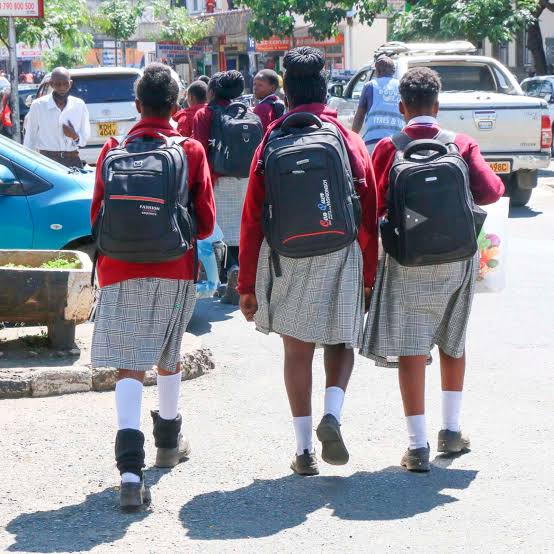
Kenya's schools reopened on August 24 for the third and final term of the 2026 academic year, with the government releasing KSh18.5 billion in education capitation. The allocation includes approximately KSh1.4 billion for Free Primary Education, KSh6.14 billion for Free Day Junior School Education and KSh10.96 billion for Free Day Secondary Education. The final term will run for nine weeks, ending on October 23. Yet despite this substantial allocation, secondary schools continue to report financial challenges. Before schools reopened, reports indicated that the government still owed secondary schools approximately KSh22.5 billion in pending capitation from the first and second terms. Teachers' representatives also reported that schools had received about KSh16,456 per learner against an expected KSh22,244, leaving a gap of roughly 26 percent. These figures raise an important question: Is the challenge simply how much Kenya spends on education, or also how effectively and predictably that funding reaches schools?Kenya's education sector remains one of the country's largest public investments.
The 2026/27 national budget allocates approximately KSh781.4 billion to education, the largest allocation to any sector. However, schools need predictable resources to pay suppliers, maintain facilities, provide learning materials and create an environment where students can learn effectively.More importantly, the education needs of today's learners are changing. Kenya is implementing Competency-Based Education at a time when young people are entering a world shaped by artificial intelligence, digital technologies, climate change, entrepreneurship and rapidly changing employment opportunities. Preparing learners for this future requires more than classrooms and textbooks. It requires digital literacy, creativity, critical thinking, problem-solving, collaboration and innovation.This is where education funding must move beyond simply keeping schools operational. Investment should also create opportunities for learners to experiment, build, create and develop practical skills. Schools need access to technology, innovation spaces, teacher development, STEM opportunities and programmes that connect classroom learning with real-world challenges.
For the Learning for Tomorrow Foundation, this is at the heart of the education transformation agenda. The Foundation focuses on transforming education, nurturing innovation and equipping communities with 21st-century skills for a sustainable future, with work spanning quality education, digital skills, teacher development and innovation hubs to address the rapidly changing world. The release of KSh18.5 billion is therefore an important step in supporting schools for the final term, but it should also prompt a wider conversation. Are we funding education simply to keep schools running, or are we investing enough to prepare young people for the world they will inherit?
The government remains the primary provider of public education, but partnerships with the private sector, foundations, communities and development organisations can complement public investment by expanding access to technology, skills development, mentorship and innovation opportunities.As learners return for their final term of 2026, Kenya should look beyond the immediate question of whether schools have enough money to finish the year. We should ask whether our investments are building an education system capable of preparing young people to learn, innovate, adapt and create sustainable solutions for tomorrow.